Cutting is one of the hardest fine-motor skills a preschooler learns, and most worksheets jump straight to complicated shapes. These start where your child actually is: fat straight lines first, then gentle curves, zig-zags, and only then real shapes. Download 3 pages free and print them tonight.
✂️ Download 3 free pages Direct download · No email needed · US Letter + A4
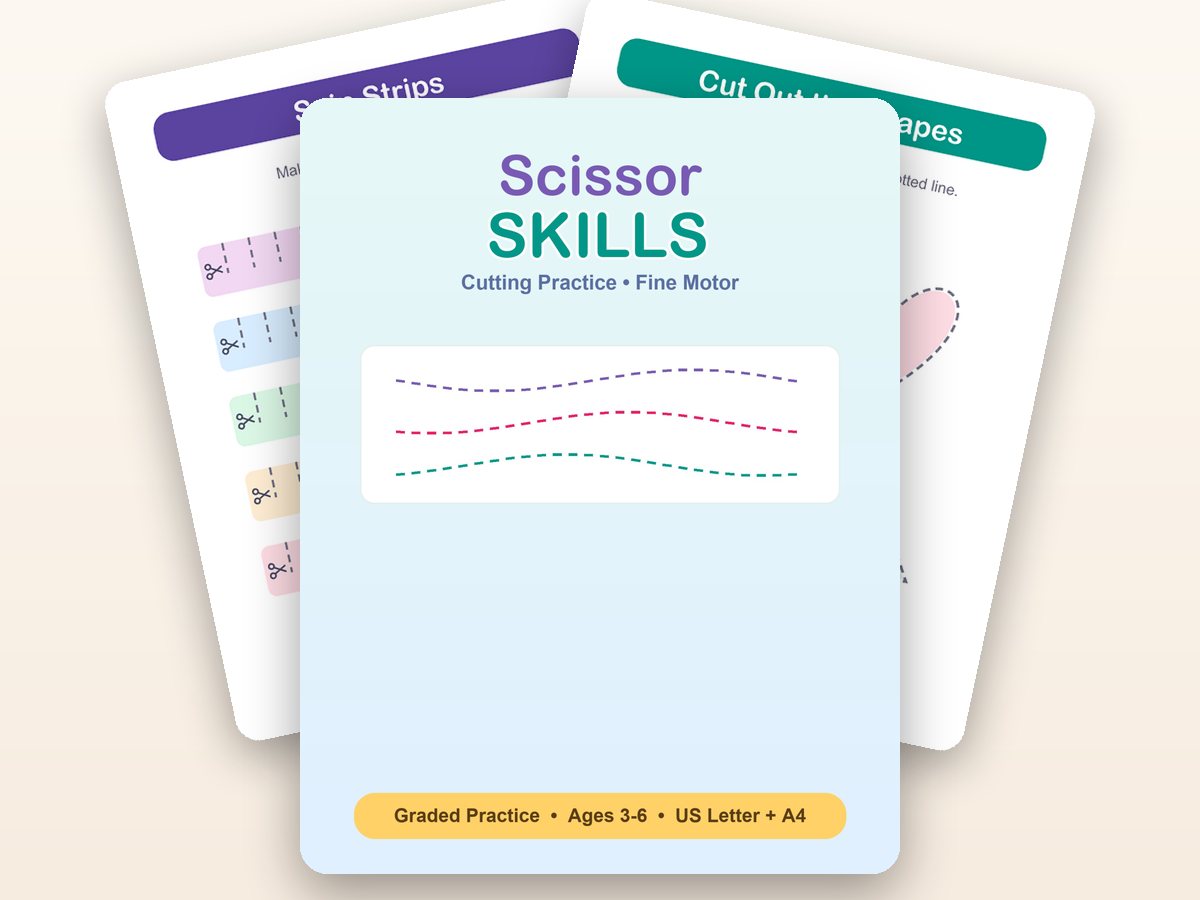
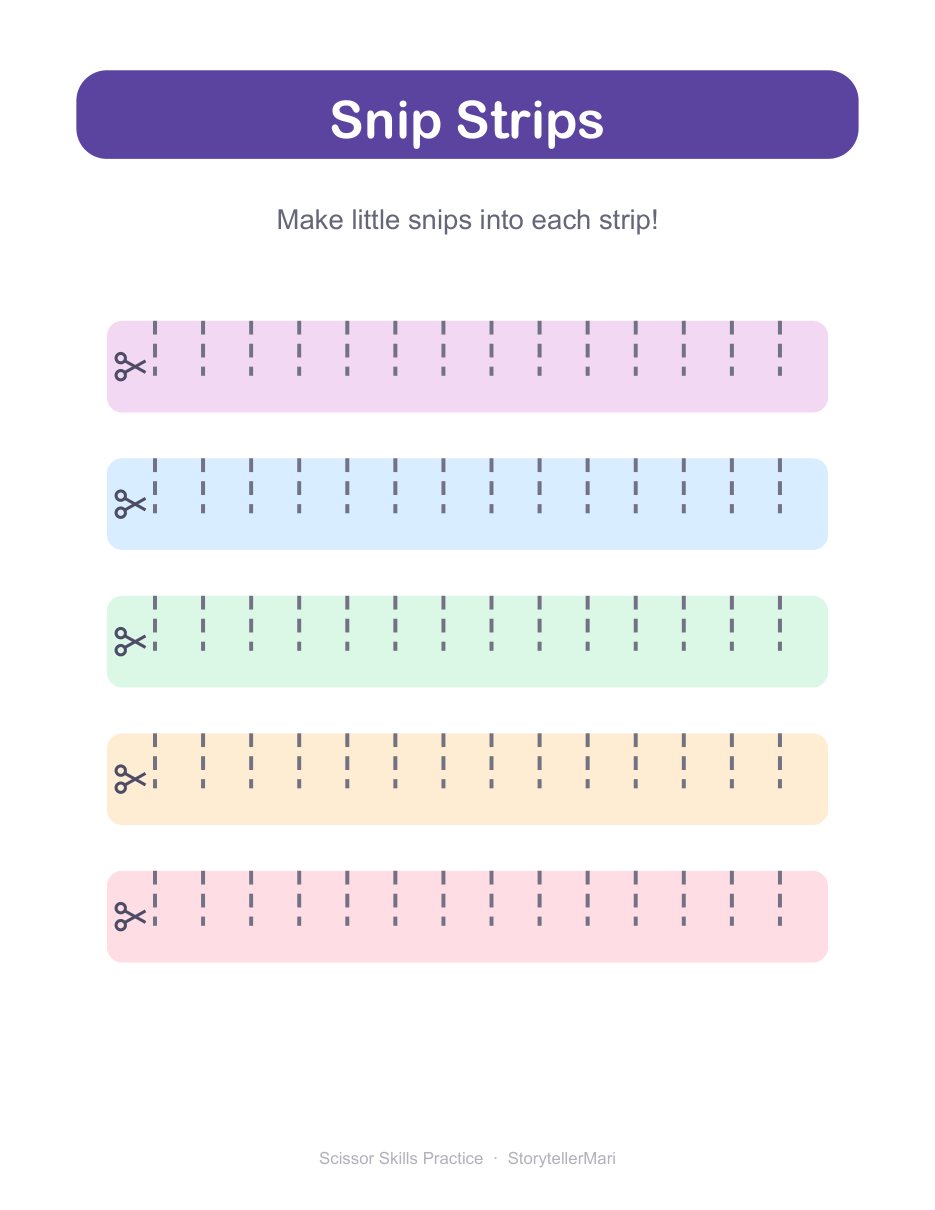
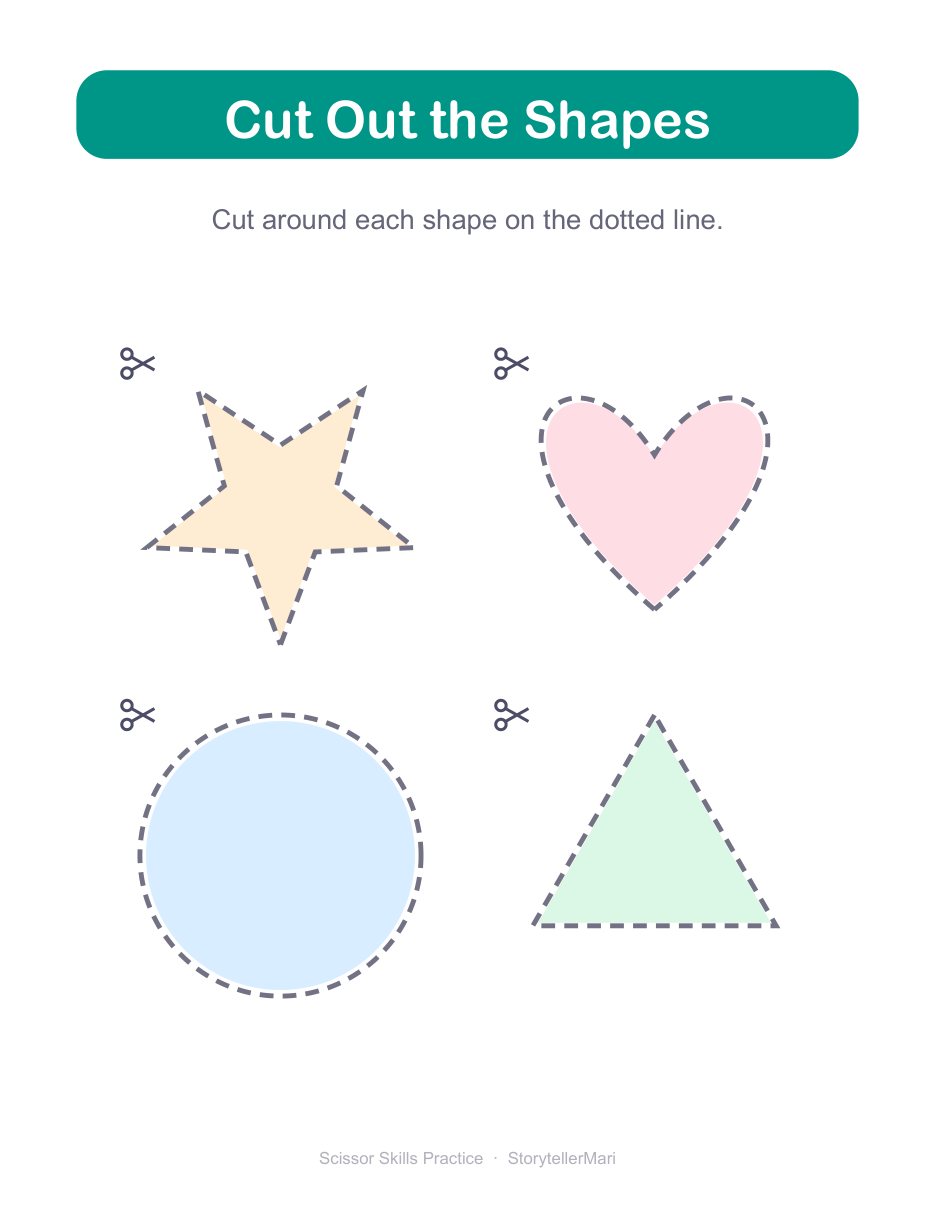
The first three pages of our Scissor Skills workbook — the wide straight-line cuts that build the grip before anything else. Print them tonight, no email needed. Want the full 12-page progression? It's in the bundle below.
No email, no card — the file downloads straight away. If it helps, the complete workbook is below.
The first lines are thick and forgiving on purpose. A 3-year-old who cuts near the line still succeeds — and a child who succeeds picks the scissors up again tomorrow.
Straight lines → gentle curves → zig-zags → corners → shapes. Twelve pages that go somewhere, instead of twelve random worksheets at the same difficulty.
Cutting strengthens exactly the muscles a pencil grip needs. Occupational therapists reach for scissors before they reach for letters — this is that work, made playful.
Alphabet & number tracing, shapes, pre-writing, scissor skills, color by number and sight words — 153 printable pages, ages 2-8, US Letter + A4. Instant download, yours to reprint forever.
Instant download · Print tonight · Secure Stripe checkoutMost children start showing interest around 3, with real control arriving between 4 and 5. These pages begin far enough back that a curious 3-year-old succeeds, and go far enough forward to still challenge a 6-year-old.
Blunt-tip child safety scissors. If your child is left-handed, use true left-handed scissors — right-handed blades hide the cutting line from a left hand, and that alone makes many kids think they "can't cut."
Three, downloaded directly — no email, no card. The complete 12-page workbook comes with the Complete Preschool Practice Bundle, along with six other workbooks.
Regular printer paper is fine for the first lines. Once you reach shapes, slightly heavier paper (or a sheet folded double) holds its form better and feels more satisfying to cut.
Free samples from every workbook — take whichever ones your child needs tonight.